

Table of contents
If you've been running for a while, you've probably noticed that the gear that worked fine for your first 5K starts feeling inadequate somewhere around your first half marathon. Maybe you're tired of clutching a handheld bottle for two hours. Maybe your phone keeps bouncing in a waist belt. Or maybe you're eyeing your first trail race and realizing you have no idea where to put the mandatory gear.
A running vest solves most of those problems. But choosing one—actually choosing the right one—is where a lot of runners get stuck. There are dozens of options, capacities range from 1.5L to 15L, and the product descriptions all start to sound the same after a while.
Here's a practical breakdown of what actually matters.
What a Running Vest Actually Is

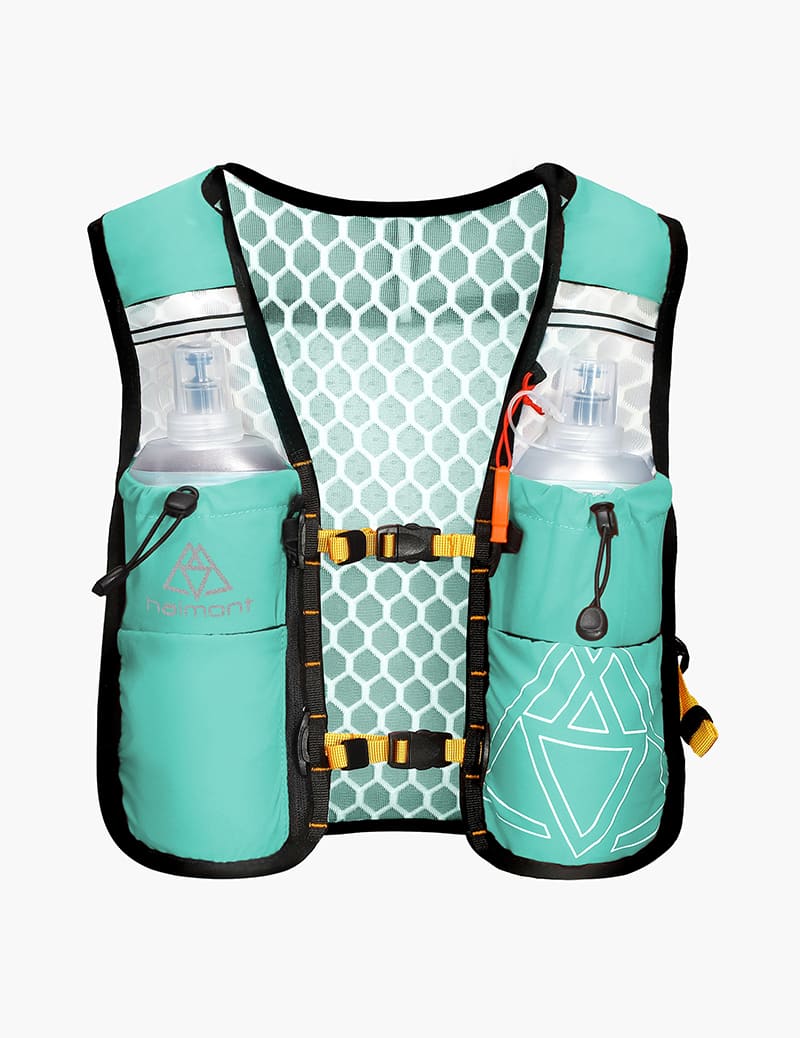
A running vest—sometimes called a hydration vest or hydration pack—is essentially a lightweight, form-fitting backpack designed specifically for running. Unlike a regular backpack, it distributes weight across your chest and back rather than hanging off your shoulders. That distribution is what keeps it from swinging around when you run.
It's not the same as a weighted vest, which adds resistance for training. A running vest is about carrying water, fuel, and essentials without disrupting your stride.
Most vests hold anywhere from 2 to 12 liters of gear, with soft flasks typically sitting in front chest pockets and a larger compartment on the back. The design allows you to drink and eat without stopping, which is the whole point.
Do You Actually Need One?
The honest answer: not for every run. If your usual route is a 5K around the neighborhood and you're home in 30 minutes, a handheld bottle or nothing at all is fine.
A vest starts making sense when one of these becomes true:
- You're running longer than 90 minutes and need consistent hydration without detouring to water fountains.
- You're on trails where aid stations are far apart and weather can shift fast.
- You're tired of carrying things in your hands—keys, phone, gels, a light layer.
- You're training for a race that requires mandatory gear like a whistle, phone, or rain shell.
For shorter runs where you just want your phone and a key, a running belt is a lighter option. But once your list of "things I need to bring" grows past two items, a vest becomes the more comfortable choice.

Capacity: Match the Vest to Your Run
This is where most people overbuy. A 12L vest for a 10K is like wearing hiking boots to the grocery store—technically it works, but it's not the right tool.
A simple way to think about it:
- Under 30 minutes / 5K: No vest needed. A handheld or small belt is plenty.
- 10K to half marathon: A 2–5L vest covers water, phone, keys, and a couple of gels. The haimont Skylite 5L Hydration Running Vest fits this window with a 208g weight (Size M) and 10 pockets—enough for a soft flask, phone, and a windbreaker without feeling like you're hauling luggage. It's designed for 10–30 km runs, with 3 adjustable sternum straps and side waist straps for a secure, friction-free fit.
- Marathon to 50K: An 8L vest is the sweet spot. It handles longer training runs and races where you need more nutrition and possibly a light layer. The haimont Race 8L Hydration Vest sits here with 15 pockets and a 235g weight (Size S), described as "one vest for 80% of use cases" for marathon trail races and long-distance training.
- Ultra distances / mountain adventures: 10L and up. This is where you're carrying mandatory gear, extra layers, and enough water for hours between refills. The haimont Ridge 10L Trail Running Vest weighs in at 193g (Size S) with 11 larger-capacity pockets, built for 50K–100K+ efforts and mountain conditions.
The counterintuitive part: a larger vest doesn't always mean a heavier carry. The 10L model here actually weighs less than the 8L and 5L options, because it's built with different materials and a simpler strap system. Capacity and weight don't scale in a straight line.
Fit Is Everything (And Most People Get It Wrong)
A running vest that bounces is worse than no vest at all. Bounce means friction. Friction means chafing. And chafing on a long run is the kind of thing you remember for a week.
A running vest should feel secure enough to stay close to your body without bouncing, shifting, or rubbing, but it should never feel so tight that it restricts your breathing or natural running movement.
Here's what a good fit actually feels like:
- The vest sits high on your ribcage, not down around your stomach.
- It clears your collarbone. If the straps are digging into your neck, the vest is too big or adjusted wrong.
- When you jog in place, the front pockets don't visibly swing or bounce. If they do, something's loose.
- You can take a deep breath without feeling like you're being squeezed.
The biggest mistake is sizing based on your usual clothing size. Running vests are sized by chest circumference, and the measurement should be taken over a running top, not bare skin. The layer you'll actually wear under the vest changes the fit.
One more thing: adjust the vest when it's loaded, not empty. Fill your soft flasks, put your phone and gels in their pockets, then tighten the straps. An empty vest that feels snug will feel loose and bouncy once you add weight.
Signs your fit is off:
- Red pressure lines on your shoulders or ribs after ten minutes.
- Straps that need retightening every 20 minutes.
- A tightness across the chest that makes deep breathing feel like work.
If any of those happen, stop and readjust. It's not a "break-in" thing. It's a fit thing.
Packing Your Vest So It Doesn't Bounce
A perfectly fitted vest can still bounce if you pack it wrong. The rule is simple: heavy items go close to your back, frequently used items go in front.
A practical packing order:
-
Hydration first. Fill and secure your flasks or bladder before anything else. This sets the baseline weight.
-
Dense items close to the spine. A rain jacket, extra layer, or anything with weight goes in the rear compartment, packed tight against your back.
-
Fuel where your hands naturally fall. Gels and chews go in front or side pockets, organized in the order you'll use them—first gel on top, later fuel behind it.
-
Phone and keys in zippered pockets. You don't want those bouncing out on a downhill.
-
Balance left and right. If you put two gels in one side pocket and nothing in the other, the vest will lean. Distribute evenly.
Cinch the straps after loading. A vest that felt snug when empty will feel completely different with two full flasks and a jacket in the back.
Keeping It Clean (Because Yes, It Will Get Gross)
Running vests absorb sweat, body oils, and whatever else ends up on them. Skip the cleaning routine, and you'll get funky smells, stiff zippers, and fabric that loses its stretch.
The short version:
- Hand wash with cold or lukewarm water and a mild detergent. No bleach, no fabric softener—both damage technical fabrics and reflective trim.
- Remove flasks and bladders first and clean them separately. A vinegar-and-water soak works well for the bottles and hoses.
- Air dry out of direct sunlight. Heat breaks down elastic fibers and mesh.
- Wash it after long or hot runs, not just when it starts to smell. Sweat residue degrades the fabric over time.
It's a five-minute habit that adds years to the vest's life.
A Few Things to Know Before You Buy
Safety details matter more than you think. A whistle and reflective details aren't marketing fluff. If you run early mornings, late evenings, or on trails where a fall is possible, those features earn their place. All three haimont vest sizes here include a safety whistle and reflective details.
You don't need the most expensive vest. The features that actually matter—fit, pocket layout, hydration compatibility—are available at every price point. What you pay extra for is usually lighter materials, more refined strap systems, and brand-name fasteners like YKK zippers and Duraflex buckles. Those are nice, but they're refinements, not requirements.
Check the return policy before you commit. Vest fit is personal. What works for one runner's torso shape might chafe on another. If you can't try it on in a store, make sure you can send it back.
In a Nutshell
A running vest isn't a status symbol or a sign that you're "serious." It's a tool. For some runs, a handheld bottle is the right tool. For others, a vest is. The difference usually comes down to distance, terrain, and how much stuff you're tired of carrying in your hands.
If you're ready to look at options, the full haimont running packs collection covers the range from minimal 5L setups to 10L mountain-ready carriers, with sizing and capacity specs listed for each. Start with the capacity that matches your longest regular run—not the longest run you hope to do someday. The right vest is the one you forget you're wearing.